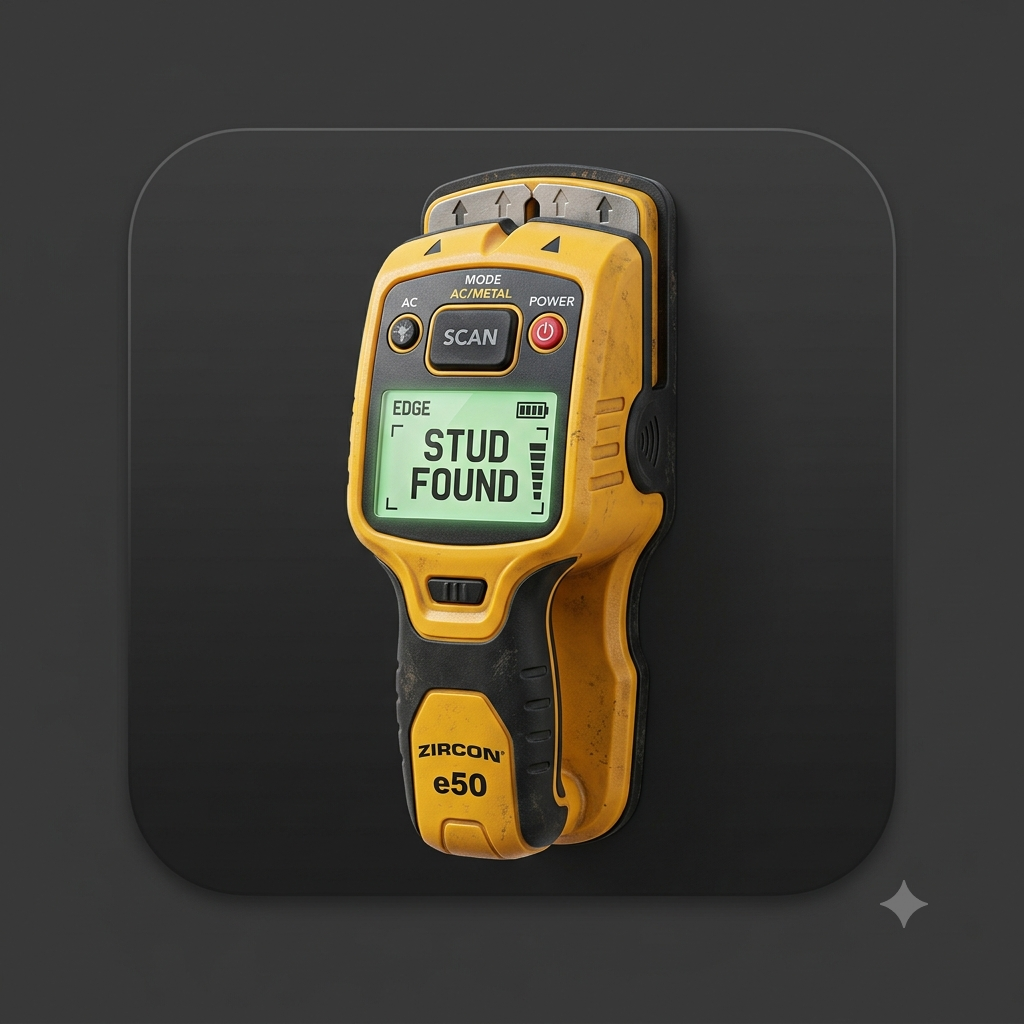
 Stud Finder
Why Stud Material Matters for Hanging and Drilling
Understanding whether your walls are framed with wood or light-gauge steel is crucial. Wood studs are 2x4 or 2x6 dimensional lumber, offering solid holding power for standard wood screws. Metal studs, common in modern high-rise apartments and commercial buildings, are hollow, C-shaped steel channels. Standard wood screws will strip out of metal studs immediately. Hanging heavy items on metal studs requires specialized fasteners like self-tapping sheet metal screws or toggle bolts [1].
The Magnetic Scan Test: Continuous vs. Segmented Pull
You can easily determine the stud material using a magnetic scanner app. Move your phone vertically along the stud's path. If the app displays a strong, high magnetic reading (above 60 µT) continuously from the floor to the ceiling, you have metal studs. If the app detects small, sharp spikes every 8 to 16 inches vertically and falls back to a low reading (around 32 µT) in between, the studs are wood, and you are detecting individual drywall screws.
Visual and Physical Clues (Knock Test, Drilling Resistance, Outlets)
You can also gather physical clues. Tap the wall horizontally: metal studs produce a higher-pitched, hollow, metallic ring, while wood studs produce a solid, deadened thump. If you remove an electrical switch cover, you may see the edge of the stud; steel studs are silver and thin, while wood studs are brown. When drilling a pilot hole, wood will offer continuous resistance and leave sawdust, whereas metal will resist briefly before the bit suddenly slips through into hollow air [2].
Best Anchors and Screws for Metal Studs vs. Wood Studs
For wood studs, use heavy-duty #8 or #10 wood screws driven at least 1.5 inches into the stud. For metal studs, use fine-thread self-tapping drywall screws for lightweight projects (under 10 lbs). For heavier items like TV mounts or heavy mirrors, use snap toggles (toggle bolts) inserted through the center of the steel stud, which spreads the load across the inner face of the metal channel.