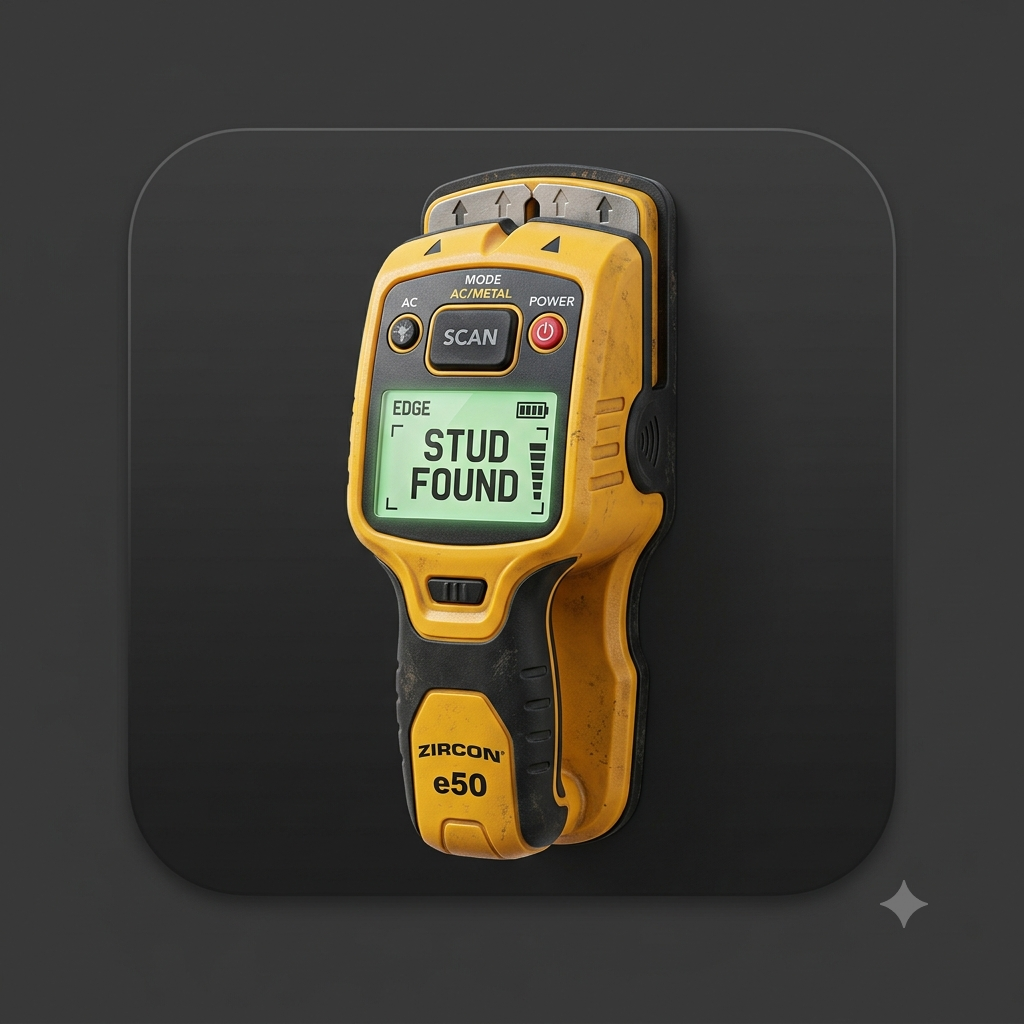
 Stud Finder
How Exterior Wall Insulation and Vapor Barriers Interfere with Sensors
Exterior walls are constructed differently than interior walls. They are packed with fiberglass, mineral wool, or foam insulation. In cold climates, a plastic vapor barrier is installed behind the drywall to prevent moisture buildup. In some homes, foil-faced insulation is used. Foil is conductive, and the plastic vapor barrier holds static charge. Electronic capacitive stud finders are highly sensitive to electrical capacitance; foil and plastic disrupt their electrostatic fields, causing the finder to read 'stud' across the entire wall [1].
Double Drywall and Shear Walls: The Thickness Challenge
Exterior walls often require structural reinforcement or additional fireproofing. Shear walls use structural plywood or OSB sheathing directly behind the drywall, particularly on corners. Soundproof or fire-rated walls may use double layers of 5/8-inch drywall. Electronic stud finders are calibrated for a single layer of 1/2-inch drywall; when faced with double thickness or plywood backing, their sensors cannot read deep enough to find the studs, resulting in false readings.
Why Magnetic Scanners and Apps Succeed Where Electronic Finders Fail
Magnetic fields pass through plastic, foil, and wood without distortion. A magnetic stud finder app detects the steel screws securing the drywall to the studs. Since these screws are always flush with the outer drywall layer, they are easy to detect, regardless of the insulation, vapor barriers, or plywood sheathing behind them. This makes magnetic apps highly reliable on exterior walls where capacitive finders fail [2].
Alternative Methods for Tracing Exterior Wall Studs
If you struggle to locate screws, use external reference points. Windows and doors are always framed with studs on both sides. Measure from these frames to find the stud line. On the outside of the home, inspect the nail pattern on the siding; siding is nailed directly into studs, revealing their positions. You can then measure and translate these locations to the interior wall.