 Stud Finder
How Magnetic Stud Finders Work (Neodymium vs. Standard Magnets)
Magnetic stud finders are passive devices. They rely on the physical principle that magnetic materials attract. Neodymium magnets (rare-earth magnets) are extremely powerful and can detect the magnetic fields of steel screws through thick drywall. A smartphone-based magnetic stud finder takes this a step further by utilizing the built-in 3D magnetometer sensor. It digitizes the magnetic flux density, allowing you to see the exact signal rise on a real-time graph, rather than relying on feeling a physical pull.
How Electronic Stud Finders Work (Capacitance and Wall Density)
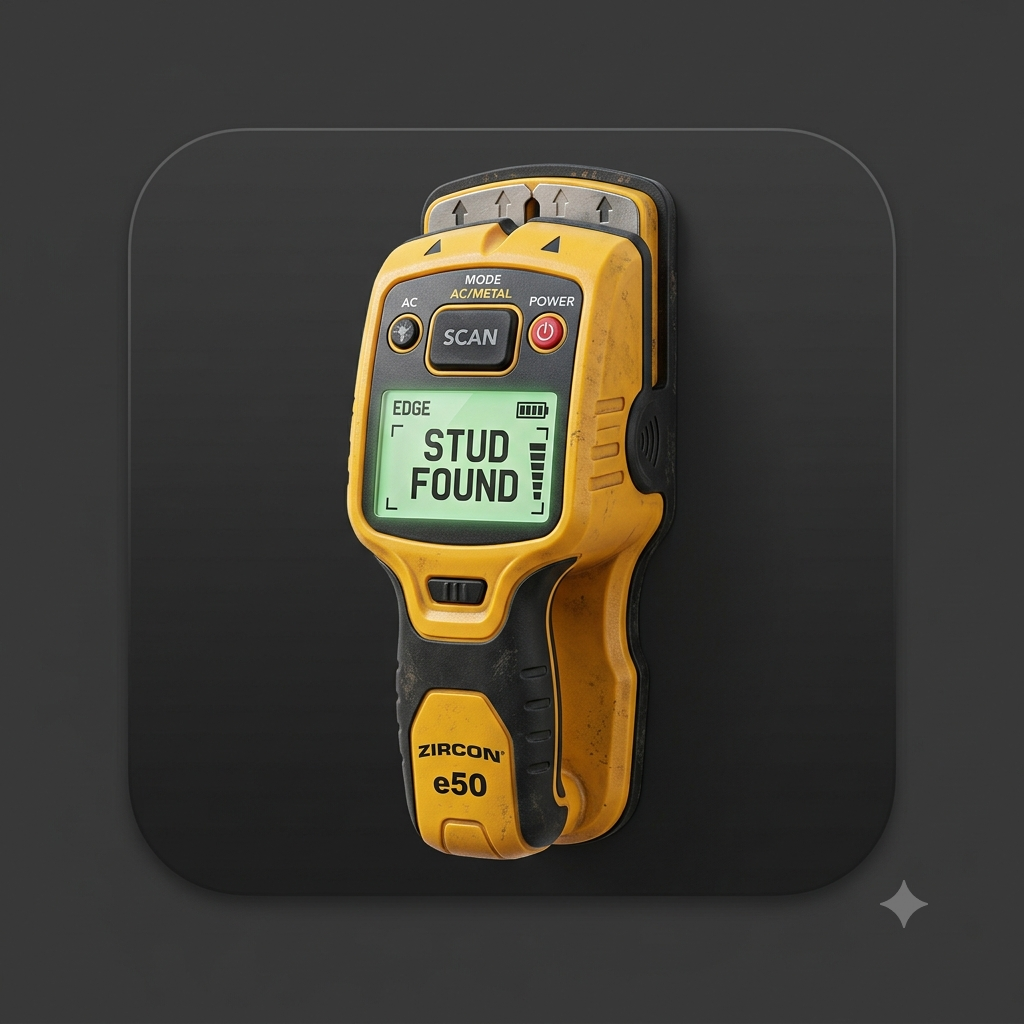
Electronic stud finders are active sensors. They contain capacitive plates that project an electrostatic field into the wall. As you slide the device, it measures changes in the dielectric constant (relative density) of the material. A higher density indicates a solid object behind the drywall, such as a wood stud [1]. Modern multi-scanners use multiple frequencies to estimate depth and try to filter out pipes and electrical wiring.
Pros and Cons of Each Stud Finder Type
Each tool has distinct trade-offs. Magnetic finders (and phone apps) are highly reliable, require no complex calibration, and have zero false positives for non-metal objects (like wiring or plumbing). However, they only locate fasteners, not the wood itself. Electronic finders can find the edge of wood directly, but they require batteries, constant calibration, and are notorious for giving false positives on wiring, damp insulation, or pipes [2].
Which Tool to Choose for Drywall, Plaster, and Metal Studs
For standard 1/2-inch drywall, both tools work, though magnetic finders are often faster and cheaper. For historic plaster and lath walls, electronic finders fail completely; magnetic tools are your only viable option. For metal studs, magnetic sensors are exceptional because the entire stud is ferromagnetic, creating a strong, continuous signal that is impossible to miss. Electronic scanners can also find metal studs but are prone to edge detection errors.