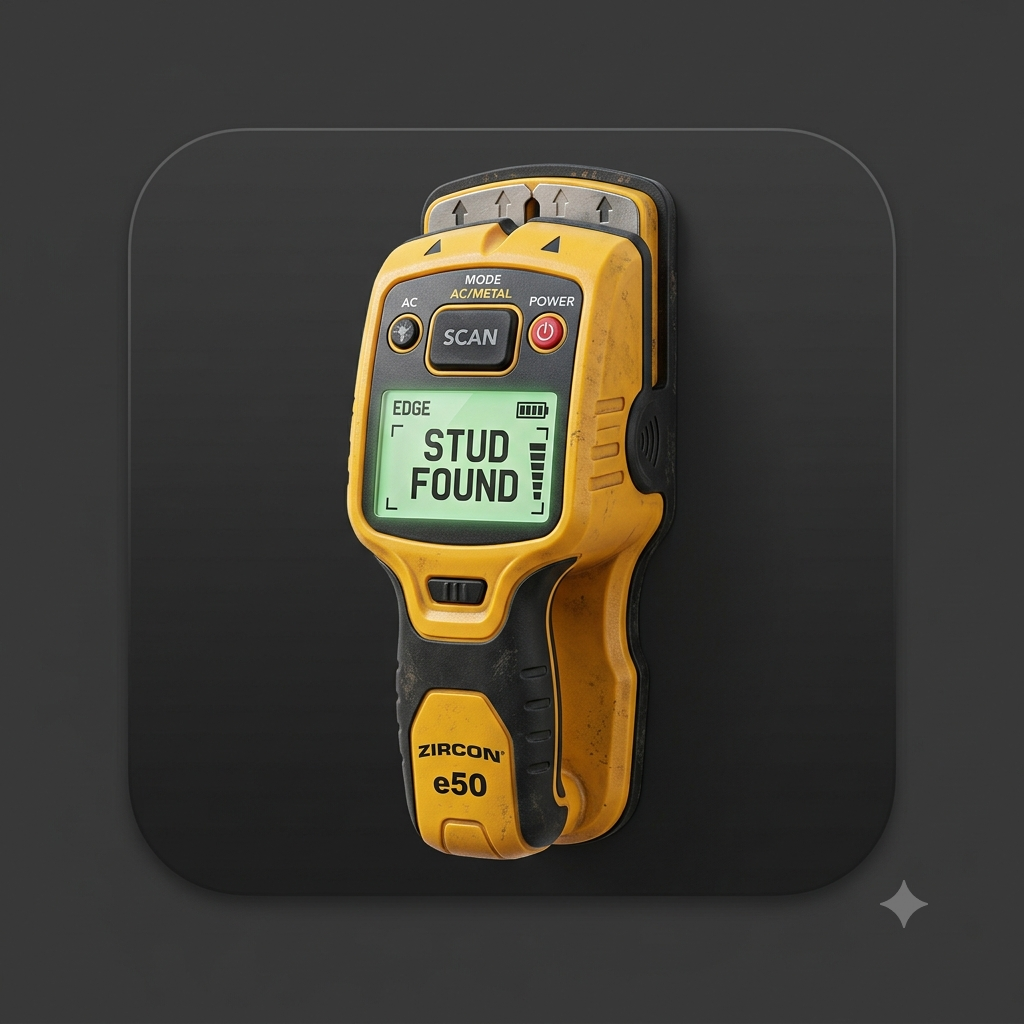
 Stud Finder
Determining the Weight of Your Mirror and Hardware Needs
Before lifting a drill, weigh your mirror on a scale. Mirrored glass is incredibly heavy; a large decorative mirror can easily weigh 30 to 70 pounds. Light picture hooks are rated for shear weight on drywall, but they fail under tension if the wall flexes. For mirrors under 15 pounds, high-quality drywall anchors are acceptable. For mirrors exceeding 20 pounds, you must anchor at least one side of the mounting bracket directly into a structural wood stud [1]. Gather heavy-duty steel wood screws, D-rings, and a bubble level.
Step-by-Step Guide to Locating and Marking Stud Centers
To locate the studs, sweep your magnetic stud finder app horizontally along the wall at the desired hanging height. When the sensor signals a spike (over 60 µT), mark this spot with a pencil. Since structural studs are 1.5 inches wide, you must find the center of the stud to ensure the screw gets full purchase in the wood. Scan from the left and mark where the signal rises, then scan from the right and mark the rise point. The exact midpoint between these two marks represents the center of the stud.
What to Do If the Mirror Placement Doesn't Align with Studs
Often, the perfect design placement for a heavy mirror lies directly between two studs. To solve this, you can mount a 1x3 wood support board (cleat) horizontally across the drywall, securing it into both studs with wood screws. You can then mount the mirror's hanging brackets directly onto the wood cleat. Alternatively, for mid-weight mirrors, you can secure one side of the mirror bracket into a stud and use a heavy-duty steel toggle bolt (rated for 50+ lbs) on the drywall side [2].
Essential Safety Tips for Drilling and Anchoring Heavy Objects
Before drilling, always map out nearby electrical outlets and switches. Wires typically run vertically or horizontally from these boxes. Use a drill bit that matches the inner shank diameter of your wood screw. Wrap masking tape around the drill bit 1.25 inches from the tip to act as a depth stop, preventing you from drilling too deep and hitting hidden utilities. Drill a pilot hole, verify wood shavings are present on the bit, and drive the screw until it is snug but not stripped.
- Verify mirror weight and choose hardware (wood screws or toggle bolts) rated for double that weight.
- Locate studs and mark the exact horizontal centers.
- Drill shallow pilot holes (no deeper than 1.25 inches) to verify wood contact.
- Secure brackets and hang the mirror, checking alignment with a bubble level.