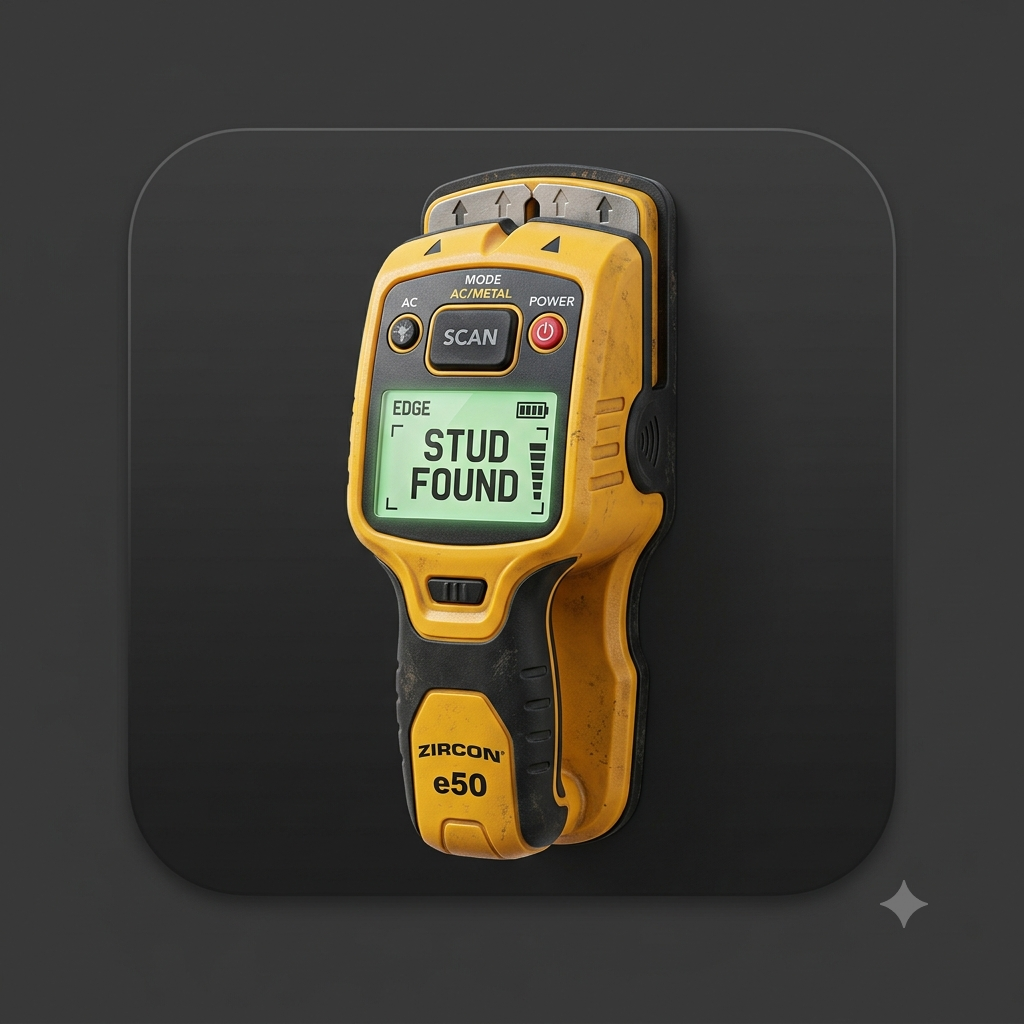
 Stud Finder
The Knock Test: Distinguishing Hollow vs. Solid Wall Sounds
The knock test is the oldest drywall trick in the book. Tap the drywall with your knuckle or a small hammer handle, moving horizontally along the wall. The wall will sound deep, hollow, and echoey in the empty space between studs. When you tap directly over a structural stud, the sound will instantly change to a higher-pitched, solid, and deadened 'thump'. Once you think you have found a stud, tap vertically along that line to ensure the solid sound remains consistent.
The Electrical Outlet Hack: Finding the Anchored Side
Electrical outlet boxes and light switch boxes are almost always nailed directly to the side of a structural stud. You can take advantage of this by removing the plastic outlet cover plate. Peer inside the gap between the plastic electrical box and the drywall. You will see which side the wood stud is on. From that stud face, you can measure standard increments (usually 16 inches) horizontally to find the next studs [1].
Measuring Tape Math: Standard Stud Spacing and Wall Layouts
Modern homes are built using strict engineering codes. Framing studs are spaced either 16 inches or 24 inches on-center. Because drywall sheets are 48 inches wide, they must align perfectly with studs. Measure from the corner of a room: the first stud is usually at 16 inches, and subsequent studs will be at 32, 48, 64, and 80 inches. Keep in mind that corners may contain extra studs for structural stability.
Visual Inspection: Spotting Drywall Nails, Seams, and Imperfections
Under normal light, drywall looks completely smooth. However, if you hold a flashlight flat against the wall and shine it across the surface, you will see minor imperfections. Look for faint vertical seams where two drywall sheets meet (always on a stud). Look for tiny circular dimples (known as nail pops) where drywall screws have settled slightly over time [2]. These are clear indicators of stud locations.